Free Case Review · 24-Hour Response Hablamos Español No Fee Unless We Win (805) 925-6060
California Personal Injury Attorneys · Since 1992

Hurt in an accident? The at-fault insurance company isn't on your side.

The adjuster will call within hours. They'll sound friendly. They'll ask for a recorded statement. And they'll use everything you say to pay you less. For 30+ years, The Peleador Method has recovered maximum compensation for Central Coast accident victims — medical bills, lost wages, pain and suffering, and the full value of your case. Call us before you call them. No fee unless we win.

No fee unless we win Free consult in EN/ES Immigration-safe Walk-ins welcome
30+ Years Fighting Auto
Insurance Carriers
$0 Out of Pocket — Only
Paid From Settlement
$[#M]+ Recovered for Central Coast
Accident Victims
3 Offices · Bilingual ·
Walk-ins Welcome
If Any Of This Sounds Familiar

The adjuster called this morning.
Here's what happens next if you don't have us.

Most of our clients arrive after 48–72 hours of the insurance company doing exactly what they're trained to do. If any of this is familiar, you're already behind — but not too far behind.

The insurance adjuster already called me.

Within hours of the accident, the at-fault driver's carrier will call — sometimes even before you've seen a doctor. They sound friendly. They ask "how are you feeling?" Everything you say is recorded. Everything you say will be used to reduce your payout. Don't give a recorded statement without an attorney.

They offered me a settlement already.

Fast offers are low offers. The insurance company is hoping you'll take $5,000 or $10,000 before you know what your medical bills actually are, whether you need surgery, or what your case is really worth. Once you sign, your case is closed — forever.

Medical bills are already piling up.

ERs, imaging centers, and specialists send bills within weeks. Your health insurance may cover some, but they'll put a lien on your recovery. You're responsible for figuring out who pays what — unless you have an attorney who handles it.

The other driver was uninsured — or left the scene.

Hit-and-run and uninsured drivers are more common than you'd think. Your own policy may include Uninsured/Underinsured Motorist coverage (UM/UIM) you didn't know about. We find it.

They're saying the accident was partly my fault.

California is a "pure comparative negligence" state. Even if you were partly at fault, you can still recover — the amount just gets reduced by your percentage of fault. Adjusters inflate your fault percentage to pay less. We push back.

I don't know what my case is actually worth.

Neither does the insurance company — but they'll pretend they do. Your case value depends on medical specials, liability clarity, available coverage, injury severity, and future care. We run all of it before giving you a number.

Any Of This Happening? Free Case Review

No cost. No obligation. We'll tell you honestly what you're facing and what to do next.

Before you say one more word to the insurance company — read this.

The adjuster is not your friend. They are a trained negotiator whose only job is to pay you as little as possible. Anything you say is recorded, stored, and used against you months or years later at settlement negotiation or trial.

Do NOT

  • Give a recorded statement to the other driver's carrier
  • Sign any medical release without an attorney's review
  • Accept any settlement offer in the first 30 days
  • Post about the accident on social media

DO

  • Decline recorded statements politely
  • Document everything — photos, witnesses, damage
  • Seek medical attention today, even if you "feel fine"
  • Get a free case review before the next adjuster call
Cases We Handle

If someone else's mistake hurt you, we handle it.

Our personal injury practice covers every major category of California injury claim. Six core case types below — plus a line of also-handled types.

Car Accidents

Rear-end collisions, T-bones, head-on impacts, multi-vehicle pileups, DUI accidents. Most common case type — and the one where adjusters run their most aggressive playbook. We know every move and we counter every move.

Truck & Commercial Vehicle Accidents

18-wheelers, delivery trucks, buses, construction vehicles. Governed by Federal Motor Carrier Safety Regulations — driver logs, maintenance records, and hours-of-service rules all become evidence. Policies are larger, stakes are higher.

$750K FMCSR minimum coverage

Motorcycle Accidents

Juries carry unconscious bias against motorcyclists. Adjusters exploit it. We don't let them. Our approach centers on accident reconstruction, traffic engineering, and showing exactly how the other driver failed to yield — because in most motorcycle cases, they did.

Rideshare Accidents (Uber, Lyft, DoorDash)

Rideshare accidents trigger a complex insurance stack — the driver's personal policy, the rideshare company's liability coverage, and potentially your own UIM. Coverage depends on whether the driver was actively carrying a passenger, logged into the app, or off duty.

$1M coverage during active ride

Pedestrian & Bicycle Accidents

Pedestrians and cyclists bear almost all the injury risk when hit by a car. We've handled these across Santa Barbara crosswalks, Santa Maria intersections, and Conejo Valley bike corridors. Right-of-way analysis matters. Surveillance footage matters more.

Slip-and-Fall & Premises Liability

Hotels, restaurants, grocery stores, parking lots, apartment complexes. The property owner owes you a duty of reasonable care. We investigate quickly — surveillance footage, maintenance logs, and prior incident reports get preserved before they vanish.

Also handled: Dog bites · Wrongful death · Uninsured/underinsured motorist claims · Construction site third-party claims · Nursing home injuries

Damages You Can Recover

What your case is actually worth — broken down.

Unlike workers' comp, personal injury damages aren't set by a statutory formula. Your recovery depends on the specifics — your injuries, your treatment, your lost income, your future care needs, and what you've been through emotionally and physically. California law gives you six categories of damages you may be entitled to.

01 · Economic

Medical Bills — Past & Future

Everything billed to you for treatment caused by the accident. ER, ambulance, hospital, imaging, surgery, physical therapy, specialists, medications, and medical equipment. We also pursue future medical costs — if you'll need ongoing treatment, surgery in a few years, or life-long care, those dollars come out of the settlement. We use life care planners and medical economists to calculate the number.

02 · Economic

Lost Wages & Earning Capacity

Every day you missed work. Plus overtime you lost, bonuses you didn't earn, and commissions you couldn't close. If your injuries affect your future earning capacity — you can't return to your old job, can't work the same hours, or have to take lower-paying work — that lost earning capacity is also compensable. Built with pay records and vocational experts.

03 · Non-Economic

Pain & Suffering

California allows recovery for physical pain, mental anguish, emotional distress, and loss of enjoyment of life. There's no formula — it's the part of the case that separates experienced PI attorneys from adjusters' scripts. We build pain and suffering through medical records, day-in-the-life narratives, and client statements that show what the injury actually did to your life.

04 · Economic

Property Damage

Vehicle repair or total loss, personal property destroyed in the accident (phones, laptops, car seats, tools), and diminished value of your repaired vehicle. Often settled separately from the injury claim — we coordinate both.

05 · Non-Economic

Loss of Consortium (Spouse)

If your spouse has lost your companionship, affection, services, or intimacy because of the injury, they have a separate claim called loss of consortium. Frequently missed by firms who don't know to file it.

06 · Punitive

Punitive Damages (Specific Cases)

When the at-fault driver's conduct was especially egregious — DUI, road rage, intentional acts — California courts can award punitive damages on top of your compensatory recovery. Rare, but powerful when applicable. We evaluate every case for punitive exposure.

The Valuation Framework

What your case is worth depends on five things.

Every PI case is different — but five factors determine the value range of virtually every case. Here's the framework we run on every new file during the free case review.

Medical Specials × Liability Clarity × Available Coverage × Injury Severity × Venue Exposure = Case Value Range
01

Medical Specials

The total medical bills already incurred plus the projected cost of future treatment. This is the "hard" number that anchors the case. Cases with high medical specials and clear causation recover more.

02

Liability Clarity

How clearly is the other party at fault? A rear-end collision where the other driver was cited is clear liability. A multi-vehicle pileup with disputed fault is not. Cleaner liability = higher recovery and faster settlement.

03

Available Insurance Coverage

You can only collect what's insured. A $5M claim against a driver with a $50K policy may be worth $50K — unless there's excess coverage, commercial coverage, or your own UIM policy. We find every available coverage source.

04

Injury Severity & Permanence

Soft tissue whiplash that heals in 6 weeks is a different case than a traumatic brain injury requiring life-long care. Permanent, life-altering injuries recover dramatically more — both in specials and in pain and suffering.

05

Venue & Jury Exposure

Where your case would be tried matters. Santa Barbara County juries award differently than Ventura or Los Angeles juries. Defense firms know this. We factor it into negotiation leverage and settlement strategy.

The Carrier Playbook

What auto insurance carriers are trained to do. And how we counter it.

State Farm. Geico. Progressive. Allstate. Farmers. AAA. USAA. Mercury. Every major California auto carrier runs variations of the same playbook — and their adjusters are measured on how much they save, not how fairly they pay.

↓ Their Move ↑ Our Counter

Call within hours. Get a recorded statement.

They're hoping you'll minimize your injuries ("I'm fine, just a little sore"), admit partial fault, or confuse the facts while you're still rattled.

We take over communication. You never speak to the adjuster again. They deal with us, in writing, on the record.

Push a fast, low settlement.

"We'd like to resolve this quickly" means they want you to sign before you know what your case is worth.

We don't let you sign anything until we know your injuries, your prognosis, your future care, and your complete damages picture. Usually 6–12 months minimum.

Dispute liability or inflate your fault.

They argue you were partly to blame — even when the facts don't support it — so they can reduce your recovery under comparative negligence.

We gather evidence before it disappears: police reports, witness statements, surveillance footage, phone records for distracted driving, and reconstructionists when needed.

Question your medical treatment.

"You waited too long to see a doctor." "You're overtreating." "Your injuries are pre-existing."

We work with physicians who document causation properly, and we push back on treatment disputes with medical records, expert declarations, and clear billing chains.

Lowball on pain and suffering.

They plug your medicals into a computer formula that drastically undervalues the non-economic side of your case.

We build pain and suffering the old-fashioned way — through your story, your medical records, day-in-the-life documentation, and expert support. Juries respond to real life.

Delay until you give up.

Missed calls, "still investigating," "waiting for records." The longer they drag, the more likely you'll take pennies on the dollar.

We set deadlines. If they miss them, we file the lawsuit. Litigation changes the math — and most carriers pay up once they're actually on a trial track.

Get My Adjuster's Offer Reviewed Free

Free review. No obligation. Even if you already have an offer, we'll tell you honestly whether it's fair.

Our Method

How The Peleador Method handles your injury case.

The Peleador Method is our four-part system for maximum recovery. Here's how it applies to your personal injury case — from day one to final settlement or trial.

1 Day 1

In-Person Intake

Real sit-down — not a form, not a chatbot. Bring everything: police report, medical records, photos, insurance correspondence. An attorney reviews it with you the same day. You leave knowing your case range, timeline, and next steps.

2 Day 1–2

Evidence Preservation

Within 24–48 hours of signing you up, we send evidence preservation letters to every party — at-fault driver's insurance, commercial property owners, anyone with surveillance footage. Most video is overwritten in 30 days. We move fast.

3 Months 1–6

Full Damages Development

We don't wait for an offer and negotiate from there. We build your complete case — treating physicians, expert declarations, life care plans, vocational analysis, day-in-the-life documentation. Then we demand the real number.

4 Months 6–24

Maximum Settlement — or Trial

Most PI cases settle. We don't negotiate from weakness. We prepare every file as if it's going to trial — because that's what gives us leverage. When the carrier sees we're ready, the offer moves. If not far enough, we file.

Time-Sensitive

The first 24 hours decide whether you have a case.

Evidence disappears. Witnesses vanish. Surveillance video gets overwritten. Skid marks wash away. The first 24 hours after an accident are the single most important window for preserving the evidence your case will depend on six months from now. Here's the sequence:

  1. Minute 1

    Call 911. Get a police report.

    Even if the accident seems minor, call the police and get a case number. The police report is the single most important document in your case — insurance companies give it enormous weight. No report = a much harder case.

  2. Minute 5–30

    Document the scene.

    Before cars move or are towed, photograph everything. Damage to every vehicle. Position of cars relative to lanes. Traffic signs and signals. Debris and skid marks. License plates. Other driver's insurance card and driver's license. If there are injuries visible, photograph those too.

    ⏱ Skid marks wash away within days
  3. Minute 30–60

    Get witness contact info.

    Anyone who saw the accident — pedestrians, other drivers, nearby business employees. Name, phone number, email. Witnesses move, change numbers, and forget details. Catch them before they leave.

  4. Hour 1–24

    Seek medical attention. Even if you "feel fine."

    Adrenaline masks injuries. Whiplash, concussion, and soft tissue injuries often don't show symptoms for 24–72 hours. If you skip the ER or urgent care, the insurance company will argue your injuries aren't from the accident. Get evaluated the same day or the next morning, no exceptions.

  5. Hour 24

    Do NOT give the adjuster a recorded statement.

    The at-fault driver's insurance will call within hours. They'll be friendly. They'll ask questions. Decline the recorded statement politely, and get to an attorney before your next conversation.

  6. Hour 48–72

    Call a personal injury attorney.

    Free consultation. No fee unless you recover. Before you sign anything, before you give any statement, before you accept any offer.

    ⏱ Surveillance video overwritten in 30 days
Just Been in an Accident? Call Us Now — (805) 925-6060

Free review. 24-hour emergency line available after hours. Immigration-safe, fully confidential.

The Coverage Stack

Who pays your damages? It's almost never just one policy.

When you're hurt in an accident, there are usually multiple insurance policies potentially available to pay your damages — not just the at-fault driver's. A big part of what we do is identifying every possible source of recovery. Here's the stack:

Layer 01 CA min: $30K / $60K

The At-Fault Driver's Liability Policy

The primary source. California requires minimum liability coverage of $30,000 per person / $60,000 per accident — tragically low for serious injuries. If the at-fault driver carries higher limits ($100K, $250K, $500K, $1M+), your recovery ceiling goes up with it.

Layer 02 Often overlooked

Your Own UM / UIM Coverage

If the at-fault driver was uninsured, underinsured, or a hit-and-run, your own Uninsured/Underinsured Motorist coverage kicks in. Most Californians have this and don't realize it. UM/UIM can be worth tens or hundreds of thousands of dollars — and we pursue it regardless of your immigration status or relationship to the at-fault driver.

Layer 03 $1K – $10K typical

Med Pay (Your Policy)

Most California auto policies include Medical Payments (Med Pay) coverage — typically $1,000–$10,000 — that pays for your medical bills regardless of fault. Available immediately, no litigation required. Many accident victims never claim it because the carrier doesn't volunteer the information.

Layer 04 $750K – $1M+

Commercial & Employer Policies

If the at-fault driver was working (rideshare, delivery, truck driver, company vehicle), their employer's commercial policy may provide much higher limits than a personal policy. Federal trucking regulations require minimum $750K liability coverage. Rideshare coverage can reach $1M during active rides.

Layer 05 $1M – $5M+

Umbrella & Excess Policies

High-net-worth drivers often carry umbrella policies that extend liability above their primary limits — $1M, $5M, or more in additional coverage. We investigate every at-fault driver for umbrella and excess coverage before we settle.

The Question We Hear Most

"I was partly at fault. Can I still recover?"

Yes. You still have a case.
Was I Partly at Fault? Free Review

California is a pure comparative negligence state. That means even if you were partially at fault for the accident, you can still recover damages — your recovery just gets reduced by your percentage of fault.

This is different from many other states, which bar recovery entirely if you're 50% or more at fault. In California, you can be 99% at fault and still recover 1%. No threshold bars you from compensation.

What this means in practice: Adjusters will try to inflate your fault percentage — sometimes dramatically — to reduce your payout. A 10% fault assignment instead of a 0% fault assignment costs you 10% of everything. We don't let them do that casually. Fault percentages are supported by evidence, not by adjuster assertions.

Common scenarios where clients were told they couldn't recover:

  • You were speeding a little — but the other driver ran the stop sign
  • You weren't wearing your seat belt — but the other driver hit you head-on
  • You stepped off the curb slightly — but the driver was texting
  • You were riding a motorcycle — and the adjuster implied you assumed the risk

In every one of these, you can recover. Call us before you accept a "no case" verdict from the insurance company.

Your immigration status does not affect your right to recover.

Under California law, any person injured by another party's negligence has the right to pursue a personal injury claim — regardless of immigration status. Lost wages, medical expenses, pain and suffering, property damage, and future care are all recoverable. Courts and juries do not consider immigration status in damages calculations.

Your information stays confidential between you and this firm. We do not share case information with employers, federal agencies, or anyone outside your legal team. We have represented thousands of immigrant accident victims across the Central Coast for three decades. Your case is no different.

Questions about your specific situation? Call us — it's confidential. (805) 925-6060 →
Real Cases. Real Recoveries.

Recent personal injury results.

$1.2M
Total Recovery

Rear-end by commercial truck · Ventura County

The Injury
Cervical herniation requiring fusion surgery.
Insurance Offered
$75,000
We Won
$1,200,000 — 16× offer. Policy limits + UIM stack recovered.
$485K
UIM Recovery

Uninsured motorist · Santa Barbara

The Injury
Multiple fractures; driver had no coverage.
Insurance Offered
$0 from at-fault driver
We Won
$485,000 through client's own UIM policy.
$340K
Premises Liability

Hotel slip-and-fall · Santa Maria

The Injury
Traumatic brain injury from wet lobby floor.
Insurance Offered
$18,000
We Won
$340,000 — 19× offer. Hotel's commercial liability policy.
See More Personal Injury Results →

Past results do not guarantee similar outcomes. Every case is unique — ask us about yours in a free review.

Why Injured Californians Hire Us

The difference between a billboard firm and a Central Coast firm.

Trial-Ready, Settlement-Smart

Most PI cases settle — but only because the insurance carriers know we'll try the case if we have to. We prepare every file like it's going to a jury. That preparation is what creates settlement leverage.

We Don't Get Paid Unless You Do

Standard contingency fee — our fee comes only from your recovery. No retainer. No hourly billing. No hidden costs. If we don't recover, you owe nothing.

Fully Bilingual Representation

Every attorney, every staff member, every document. English and Spanish. Insurance adjusters can't run the language-barrier playbook on our clients.

Three Central Coast Offices

Santa Maria. Santa Barbara. Calabasas. Walk in. Meet an attorney the same day. No phone trees. No "we'll have someone call you back."

Your Personal Injury Team

The attorneys fighting for you.

Bill Wolff

William Wolff

30+ years representing injured Central Coast workers and accident victims. Tried cases across Santa Barbara, Ventura, and San Luis Obispo counties.

Read Bill's full bio →
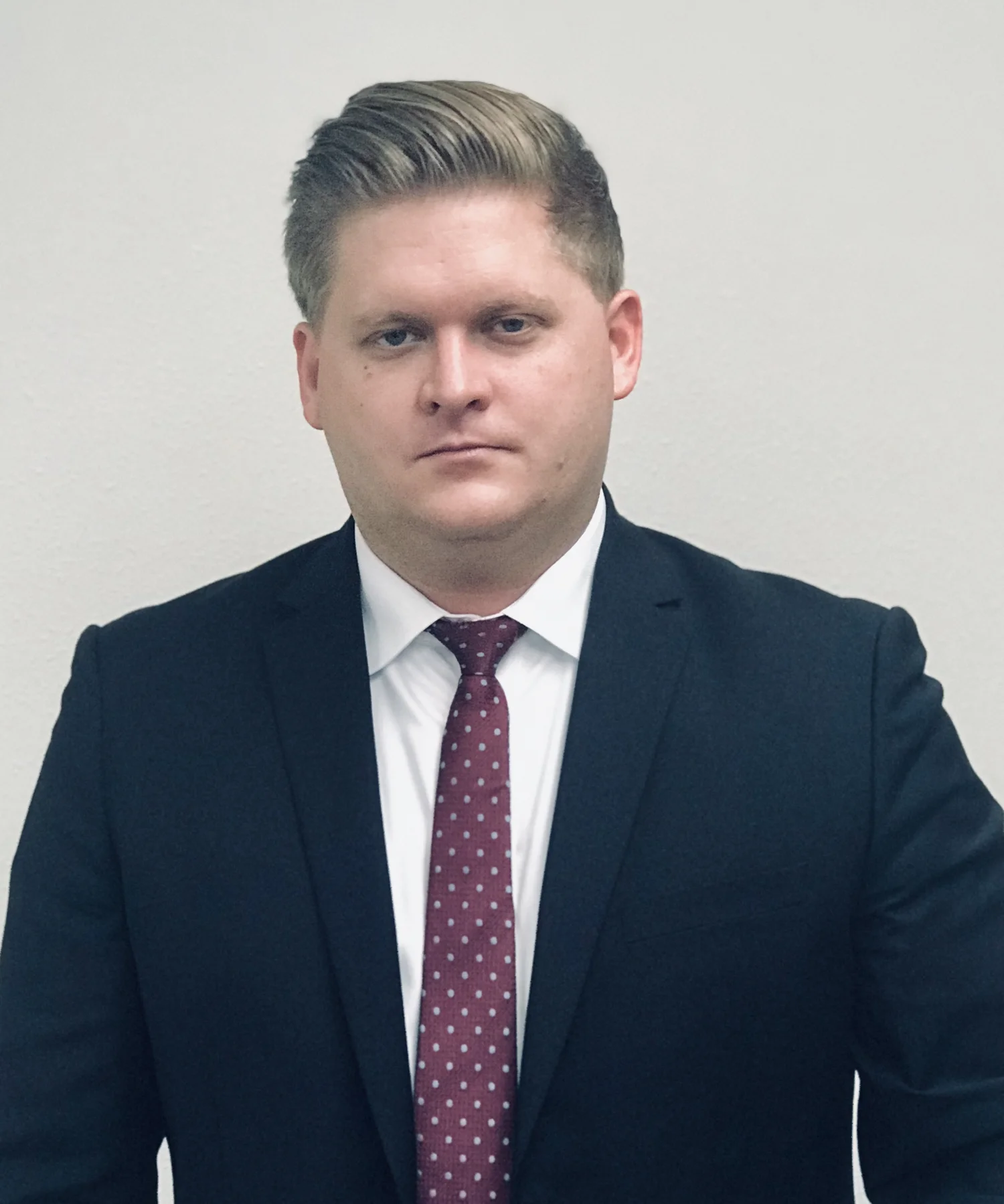
Kyle C. Walker, partner at Wolff Walker Law

Kyle C. Walker — "El Peleador"

Leads the firm's personal injury practice. Known across the Central Coast Hispanic community as Abogado El Peleador. Handles auto, truck, motorcycle, and premises cases across three counties.

Read Kyle's full bio →
Common Questions

Personal injury questions we hear every day.

How long do I have to file a personal injury claim in California?
California's statute of limitations for most personal injury claims is two years from the date of injury. For wrongful death, two years from the date of death. For claims against a government entity (like a city or county), you have only six months to file a notice of claim. Don't wait — evidence disappears long before the statute runs.
How much does it cost to hire a personal injury attorney?
Nothing up front. California personal injury attorneys work on contingency — our fee is a percentage of your recovery, paid only if we win. Standard rates are 33–40% depending on whether the case settles or goes to trial. If we don't recover, you owe nothing.
What is my case worth?
Every case is different. Value depends on medical specials, liability clarity, available insurance coverage, injury severity, and future care needs. In a free case review, we run the framework on your specific case and give you a realistic value range.
Do I have to go to court?
Most personal injury cases settle without a trial. But we prepare every case as if it's going to a jury — because that preparation is what creates settlement leverage. If trial is necessary, we're ready.
What if the at-fault driver didn't have insurance?
If the driver was uninsured or the insurance is inadequate, your own Uninsured/Underinsured Motorist (UM/UIM) coverage may apply. Most Californians carry it without realizing. We pursue UM/UIM claims aggressively.
What if the accident was partly my fault?
California is a pure comparative negligence state. You can still recover even if you were partially at fault — your recovery is reduced by your percentage of fault, but never barred.
Does my immigration status affect my case?
No. California personal injury law applies to every injured person regardless of immigration status. Your information is fully confidential.
What if the other driver left the scene (hit-and-run)?
Your Uninsured Motorist coverage typically covers hit-and-run accidents, as long as there's evidence the accident was caused by another vehicle (damage consistent with collision, witness statements, police report). File a police report immediately.
The adjuster already called me. Did I ruin my case?
Probably not — but don't talk to them again. If you gave a recorded statement, tell us exactly what you said so we can work around it. The earlier you bring us in, the more we can do.
Should I accept the insurance company's first offer?
Almost never. First offers are almost always a fraction of case value. At minimum, get a free review from an attorney before you sign anything. Once you sign a release, your case is closed forever.
What's the difference between a claim and a lawsuit?
A claim is a demand made to the insurance company. A lawsuit is a formal case filed in court. Most cases are claims — we negotiate with the carrier. If the carrier won't pay fairly, we file a lawsuit. Filing often changes the settlement math.
How long does a personal injury case take?
Straightforward cases with clear liability can settle in 6–12 months. Complex cases — disputed liability, severe injuries, multiple defendants, or trial — can take 18–36 months or longer. We give you a realistic timeline at your free review.
Free Review · No Fee Unless We Win · English or Spanish

Before you call the insurance company — call us.

Every day you wait, evidence disappears. Every conversation with the adjuster costs you leverage. Every offer you hear without an attorney is an offer designed to pay you less. Your free case review takes 15 minutes. It might be the most valuable 15 minutes of your entire claim.

Free Case Review

Tell us what happened in 15 minutes. We'll tell you honestly what your case is worth.

No Fee Unless We Win

Our fee comes only from your recovery. No retainer. No hourly billing. No recovery = no fee.

English or Spanish

Every attorney, every staff member, every document. Fully bilingual.

No fee unless we win · Walk-ins welcome at all three offices · Immigration-safe, 100% confidential · English or Spanish